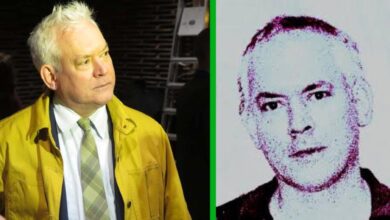
John Wickham and Ann Wickham: The Quiet Partnership Behind Keyhole Surgery’s Boldest Pioneer


John Wickham is one of those names that most people have never heard, yet almost everyone has been touched by his work in some way. If you or someone you know has ever walked out of a hospital a day or two after surgery instead of spending weeks flat on their back recovering from a long, painful scar, there is a good chance you owe a small debt to this soft-spoken British urologist. He spent his entire career trying to make surgery gentler, smaller and far less brutal than the medicine he trained in. And behind that career, steady and present through every twist of it, was his wife, Ann Wickham. Together they made an unlikely but unforgettable pair: a tinkering surgeon obsessed with vintage cars and tiny incisions, and a theatre nurse with striking blue eyes who became the anchor of his life.
Who Was John Wickham?
John Wickham was a British urologist and surgeon widely regarded as the man who brought keyhole surgery to the United Kingdom and gave the whole movement a name that stuck: minimally invasive surgery. Born in December 1927 and passing away in October 2017, he lived through nearly a century of medical change, and he was responsible for a healthy chunk of it himself. What made him stand out was not just technical skill, although he had plenty of that. It was his stubborn refusal to accept that the way things had always been done was the way they should keep being done. In an era when many surgeons took pride in cutting large openings so they could see and reach everything by hand, Wickham looked at the long scars left behind and saw cruelty rather than craftsmanship. He believed there had to be a better way, and he spent decades proving it.
Early Life and Roots in Sussex
John Wickham’s beginnings were a long way from the cutting edge of robotic surgery. He was born in Chichester, in West Sussex, into a comfortable household. His father, Alfred James Wickham, was a company director who ran a thriving business along the south coast, and his mother was Hilda May Wickham, whose maiden name was Cummins. The early stability of that family life was shattered when John was only five years old. Alfred James Wickham died young, leaving Hilda May Wickham to raise her son largely on her own. Mother and son moved to a flat overlooking the seafront in Littlehampton, and it was here, in the salty air of the Sussex coast, that the young boy’s character began to take shape. He grew into a curious, mechanically minded child who would rather pull an engine apart and put it back together than sit still in a classroom, and that love of machines never left him.
Education and the Pull Towards Medicine
As a schoolboy at Chichester High School for Boys, John leaned heavily towards the sciences and away from the arts, and it became clear fairly early that medicine was where he was headed. He was a capable student who collected the academic certificates of his day and earned exemptions from university entrance examinations, a sign that his sharp mind matched his restless hands. After leaving school he completed his National Service in the Royal Air Force, serving as a medical orderly, which gave him an early, practical taste of clinical life. In 1949 he won a place at St Bartholomew’s Hospital Medical College in London, affectionately known as Barts. There he took an intercalated science degree in physiology in 1952 and qualified as a doctor in 1955. His first real exposure to surgery came in neurosurgery, where he watched delicate, precise operations on the brain. That experience left a deep mark on him, because once he saw how careful and gentle surgery could be, the rough, slashing approach common elsewhere struck him as needlessly violent.
Meeting Ann Wickham: A Love Story in the Operating Theatre
The way John Wickham met Ann Wickham is the kind of story that sounds too charming to be true, yet by every account it really happened. Ann, whose maiden name was Loney, was a theatre nurse, and the two of them crossed paths in the most unlikely of romantic settings: the middle of an urgent below-the-knee amputation. As John worked, he found himself completely distracted by a pair of beautiful blue eyes peering at him over the top of a surgical mask. By his own cheerful telling, as the patient’s leg came off, he seized the moment and invited his masked assistant out on a pub crawl. Ann said yes. That first night out, with a visit to the famous Prospect of Whitby pub thrown into the mix, sealed his fate. He was, in his words, completely hooked. About eighteen months after that theatre encounter, in 1961, John and Ann Wickham were married, beginning a partnership that would last more than half a century.
The American Decision and the Choice to Come Home
Not long into their marriage, John Wickham’s talent earned him a Fulbright scholarship that took the couple across the Atlantic to Lexington, Kentucky. He thrived there, studying renal ischaemia and earning a master’s degree, and crucially he made a discovery that shaped the rest of his career. He learned that kidneys, which surgeons had to clamp during operations to stop catastrophic blood loss, could survive far longer if they were cooled. This insight into renal cooling and controlled ischaemia would later feed directly into his pioneering stone surgery back home. The Americans were so impressed that they offered him a professorship of urology to stay on permanently. It was, as he later admitted, an agonising decision. In the end, he and Ann Wickham made the call together, deciding with a twinkle of humour that they would rather raise English children than American ones. So they packed up and returned to London, a choice that kept his life’s work rooted in British hospitals.
Building a Career at Barts and Beyond
Back in the United Kingdom, John Wickham’s career gathered real momentum. He had trained under formidable mentors, including the urologist Alec Badenoch, and gained his Fellowship of the Royal College of Surgeons in 1959, in an era when the pass rate for that brutal examination hovered around a mere ten percent. He spent formative time at Hammersmith Hospital, a hotbed of medical innovation, before settling into the institution that would define him. He was appointed a consultant urologist at St Bartholomew’s Hospital, taking the helm of its urology department, and he also became a senior figure at the Institute of Urology in London, eventually directing its academic unit. From these positions he was perfectly placed to push his radical ideas about gentler surgery, and push he did, often against considerable resistance from more conservative colleagues who were perfectly happy with the old, larger-incision ways.
Pioneering Keyhole and Minimally Invasive Surgery
This is where John Wickham truly earned his place in medical history. In 1979, at the Institute of Urology, he performed the first single-stage percutaneous nephrolithotomy in Britain, a keyhole technique for removing kidney stones, working alongside the radiologist Michael Kellett. The results were astonishing for the time: hospital stays that once stretched to six weeks shrank to a couple of days, and patients suffered far less. He introduced extracorporeal shock wave lithotripsy and percutaneous nephrolithotomy to the country and fought hard to make sure National Health Service patients, not just private ones, could benefit from these advances. In 1986 he gave the whole emerging field its enduring label, coining the phrase minimally invasive surgery, and he expanded on the concept of minimally invasive therapy a few years later. He famously grumbled to the press about colleagues who believed you could not operate properly unless you cut a hole big enough to fit your head inside, a line that captured both his wit and his frustration.
The Robot, the Potatoes and a Glimpse of the Future
If pioneering keyhole surgery were not enough, John Wickham also peered decades into the future and helped invent the first autonomous surgical robot. Working with Professor Brian Davies of Imperial College, he developed a device called the PROBOT, designed to carry out the difficult prostate operation known as transurethral resection. In April 1991 the PROBOT became, by most accounts, the first active robot to remove soft tissue from a human patient on its own. Before it ever touched a person, though, its early trials were carried out on humble potatoes, a detail that perfectly sums up Wickham’s blend of serious science and down-to-earth practicality. The robot proved too expensive to manufacture at scale and, like its inventor, was arguably ahead of its time. Yet it foreshadowed the robotic surgery revolution that would sweep operating theatres a generation later, which is why many now call him the godfather of robotics in urological surgery.
The Man Behind the Surgeon: Cars, Parties and Personality
Strip away the medical accolades and John Wickham was, at heart, a mechanic who happened to operate on people. He adored vintage cars and was especially devoted to restoring old Daimlers, and friends recall the slightly terrifying thrill of being driven by him at well over a hundred miles an hour along open south coast roads. He often compared surgery to repairing an engine, insisting that if you took something apart slowly and put it back together carefully, it would run well again, which is precisely why he reconstructed every tissue he ever cut. He and Ann Wickham were renowned hosts. At their home, a grand sixteenth-century house called Stowe Maries near Dorking in Surrey, complete with an outdoor swimming pool, they threw legendary themed parties that colleagues from around the world still talk about. The doors were always open, and visitors were as likely to find the great surgeon in mechanic’s overalls under a car as in a white coat.
Ann Wickham and the Three Daughters
Ann Wickham was far more than a footnote to her husband’s fame. She was, by every loving account, his great companion and the partner in much of his labour, the person who kept the hospitality flowing at home and who stood beside him on the wards even at Christmas. Together John and Ann Wickham raised three daughters, and each of them carved out her own path in life. Susan went on to run a church charity, dedicating herself to community and faith. Caroline became matron at Oakham School in Rutland, carrying a touch of her father’s care for others into education. The youngest, Clare, chose to lead a more private life away from the public eye. There is a fond family joke that captures the household perfectly: John used to tell younger colleagues that good urologists have daughters, a line that delighted him given he had three of his own. Ann survived John after his death in 2017, along with their daughters Susan, Caroline and Clare.
Honours, Final Years and Lasting Recognition
John Wickham officially retired from clinical practice in 1992, but retirement for a mind like his was a fairly loose concept. He set up a company called Syclix that developed surgical instruments, including a clever tool with a pen-like grip that allowed surgeons to handle tissue more naturally than the traditional scissor grip. That invention won him the prestigious Horners Award in 2006. In 2013 the Royal College of Surgeons of England honoured him with the Cheselden Medal in recognition of his outstanding contributions to stone surgery and laparoscopic urology. Shortly before his death he published a memoir titled An Open and Shut Case, telling the story of keyhole surgery in his own honest and wry voice. He died of heart failure in October 2017 at the age of 89. His memory lives on not only in countless patients but in the European Association of Urology’s John Wickham Lifetime Achievement Award, which carries his name forward to new generations of surgeons.
Conclusion
John Wickham was that rare figure who managed to be both decades ahead of his time and deeply grounded in the everyday business of caring for patients. He looked at the long, painful scars of traditional surgery and simply refused to accept that suffering as inevitable, and in doing so he helped usher in an entire era of gentler, smaller, smarter medicine. The man who tinkered with Daimlers and tested his robot on potatoes also reshaped how millions of people experience surgery, often without ever knowing his name. Yet his story is not complete without Ann Wickham, the bright-eyed theatre nurse who became his lifelong partner, the mother of Susan, Caroline and Clare, and the steady presence behind the legendary parties and the relentless innovation. Rooted in the family begun by Alfred James Wickham and Hilda May Wickham and carried forward by his own daughters, John Wickham’s life was a blend of brilliance, warmth and quiet determination. He hoped his efforts might have made some small dent in unnecessary surgical suffering, and in truth they made an enormous one.