Tallulah Hoffman and Willa Hoffman: Inside the Quiet Lives of Philip Seymour Hoffman’s Daughters

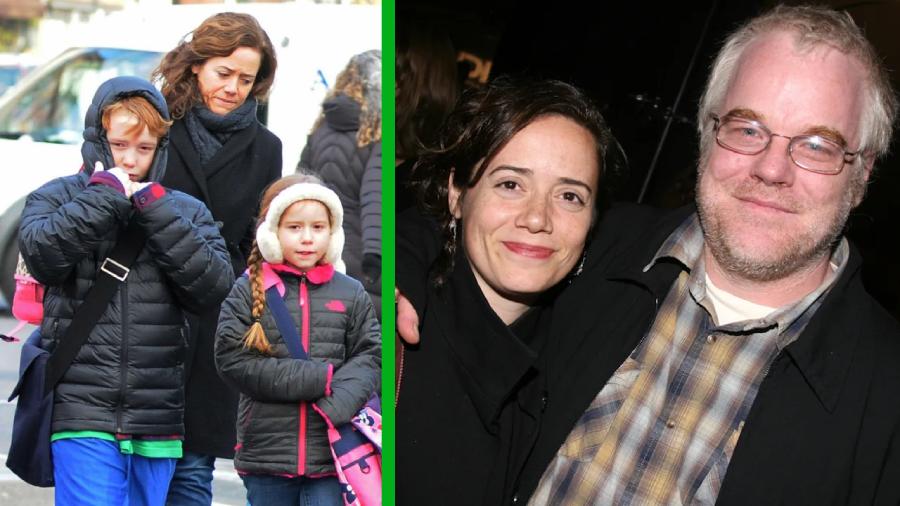
Tallulah Hoffman carries one of the most respected surnames in modern American film, yet she has spent her entire life choosing to stay almost completely out of view. As the youngest daughter of the late, Oscar-winning actor Philip Seymour Hoffman and costume designer Mimi O’Donnell, she belongs to a family the public feels it knows intimately — and yet, when it comes to Tallulah herself, the verifiable record is short and the speculation online is long. This article tries to do the opposite of the usual celebrity-child write-up. Instead of inventing a personality or a career to fill space, it sticks to what is actually documented about Tallulah, her sister Willa Hoffman, and the remarkable family that surrounds them. What emerges is less a tell-all and more a portrait of a household built on art, marked by loss, and defended by privacy.
Who Is Tallulah Hoffman?
Tallulah Louise Hoffman was born on November 17, 2005, in New York City, the youngest of Philip Seymour Hoffman and Mimi O’Donnell’s three children. She grew up in Manhattan, in a family steeped in theatre and film, but she has never been a public figure in the way her father was or her brother has become. Almost everything you can responsibly say about Tallulah comes back to her family rather than to any public work or statement of her own — and that is precisely the point. She was a young child, only seven years old, when her father died in 2014, and in the years since, she and her mother have kept her life firmly outside the reach of cameras and interviews. The curiosity around her name is enormous, but the honest answer to “who is Tallulah Hoffman?” is that she is a private young woman whose story belongs to her, not to the internet.
The Hoffman Family at a Glance
Understanding Tallulah really means understanding the people around her, because the family is where all the documented detail lives. Her father was Philip Seymour Hoffman, widely regarded as one of the finest actors of his generation. Her mother is Mimi O’Donnell, a costume designer with deep roots in New York theatre. Tallulah has two siblings: an older brother, Cooper Philip Hoffman, and an older sister, Willa Marilyn Hoffman. On her father’s side, the family also includes her paternal grandmother, Marilyn O’Connor, a former judge who was part of the family’s public moments of grief in 2014. Together, these names form the framework of Tallulah’s world — a small, tightly knit, creatively driven family that experienced one of the most publicized celebrity losses of the decade while trying to grieve as ordinary people.
Growing Up in the Hoffman–O’Donnell Household
Tallulah grew up in a home where storytelling was not a hobby but a livelihood and a worldview. Her father was not only a celebrated screen actor but also a passionate stage performer and theatre director, deeply involved with New York’s downtown theatre scene. Her mother built a career designing costumes, a craft that lives at the intersection of character, history, and emotion. A childhood spent around script readings, rehearsals, fittings, and opening nights tends to shape the way a person sees the world, even if that person never sets foot on a stage. It is fair to say that Tallulah, along with Cooper and Willa, was raised in an environment unusually rich in creative conversation. What is not fair is to assume we know how that shaped her specific tastes or ambitions, because she has never told us — and the family has been careful to let the children define themselves on their own timelines.
Her Father, Philip Seymour Hoffman: A Towering Legacy
You cannot tell Tallulah’s story without spending real time on her father, because his work and his death are the gravitational center of the family’s public life. Philip Seymour Hoffman was an actor of extraordinary range, capable of disappearing into wildly different roles and finding the bruised humanity in nearly all of them. He won the Academy Award for Best Actor for his title performance in Capote (2005), and he earned further Oscar nominations for Charlie Wilson’s War, Doubt, and The Master. Audiences also knew him from Boogie Nights, Magnolia, The Talented Mr. Ripley, Almost Famous, the Mission: Impossible franchise, and the Hunger Games films, where he played Plutarch Heavensbee. Beyond the screen, he was a serious theatre artist, both performing and directing, and a respected figure in the New York stage community. He died on February 2, 2014, in his Manhattan home, from what was reported as a heroin overdose, at the age of 46. For Tallulah, then a child, this was not the loss of a cinematic icon but the loss of a father — and that distinction sits underneath everything the family has chosen to keep private since.
Her Mother, Mimi O’Donnell, and the Art of Costume Design
Mimi O’Donnell — sometimes listed by her given name, Marianne — is the steady presence at the heart of Tallulah’s life. A costume designer with a strong theatre background, O’Donnell built a career in a craft that demands both artistry and discipline: dressing characters so convincingly that the audience forgets the clothes were ever a choice. She met Philip Seymour Hoffman through the world of theatre, and the two were partners for many years and parents to three children, though they were never married. After Hoffman’s death, O’Donnell has spoken and written publicly, on rare occasions, about grief and about the realities of loving someone who struggled with addiction — doing so with a candor that was clearly meant to help others rather than to court attention. In the years since, she has been the parent steering the family through public tragedy toward private normalcy, and the relative invisibility of Tallulah and Willa in the press is, in large part, a reflection of her protective approach to raising them.
Cooper Philip Hoffman: The Sibling in the Spotlight
If Tallulah represents the family’s commitment to privacy, her older brother, Cooper Philip Hoffman, represents the part of the next generation that has stepped, deliberately, into the family business. Cooper made a striking film debut as the lead in Paul Thomas Anderson’s Licorice Pizza (2021), a performance that earned warm reviews and immediately invited comparisons to his father — comparisons he has handled with notable grace. The “nepo baby” conversation has followed him, as it follows nearly every actor descended from a famous parent, but much of the critical response has focused on his own presence and instincts rather than simply on his last name. Cooper’s visibility is useful context for understanding Tallulah, because the contrast is so sharp: one sibling chose a public-facing creative career, while the others have remained almost entirely out of frame. That divergence is a reminder that there is no single “Hoffman path,” only individual choices made by individual people who happen to share a powerful surname.
Willa Marilyn Hoffman: The Youngest Connections of the Family
Willa Marilyn Hoffman is Tallulah’s sister and, like Tallulah, a private individual whose life has unfolded away from public attention. The two sisters were very young when their father died — reports from 2014 placed the children’s ages at ten, seven, and five — and both have grown up shielded from the kind of media scrutiny their father lived with. Willa’s middle name, Marilyn, echoes the family’s connection to her paternal grandmother, Marilyn O’Connor, a small detail that hints at how the family threads its history through its names. Beyond these family relationships, there is very little verified public information about Willa, and that absence should be read not as a mystery to be solved but as a boundary to be respected. She, like her sister, is entitled to a life that is hers alone, and the most accurate thing one can say is simply that she is part of a close family that has chosen quiet over fame.
The “No Trust Fund Kids” Decision
One of the most widely discussed chapters of the Hoffman family story concerns money, and it is genuinely revealing about the values Tallulah was raised around. After Philip Seymour Hoffman’s death, his will became public, and it named Mimi O’Donnell as the sole beneficiary of his estate, identifying her as his companion and the mother of his children. The document had been drafted back in 2004, when only Cooper had been born, before Tallulah and Willa arrived. Reporting at the time highlighted that Hoffman had reportedly resisted the idea of leaving large trust funds directly to his children, expressing a desire that they not become, in the popular phrase, “trust fund kids.” The will even included a wish that Cooper be raised in or regularly exposed to culturally rich cities such as Manhattan, Chicago, or San Francisco. Whatever one thinks of the financial planning involved, the intention reads clearly: Hoffman wanted his children to grow into curious, independent, self-made people, and he trusted their mother to raise them that way.
Life After Loss and the Family’s Choice of Privacy
The defining fact of Tallulah’s childhood is that she lost her father young and very publicly, and the family’s response has been to draw a firm circle of privacy around the children. There is something quietly admirable in that decision. In an era when the children of celebrities are often pushed onto social media or into reality television, the Hoffman family has done the opposite, allowing Tallulah and Willa to grow up as ordinary New Yorkers rather than as public extensions of a famous father. This is why credible, specific information about Tallulah’s education, interests, or adult life is so scarce: it has been kept private on purpose. The flood of online “biographies” that claim to detail her career, her aspirations, or her personality should be read with real skepticism, because most of them are filling a vacuum with invention. The respectful, accurate version of Tallulah’s post-2014 life is brief by design.
Marilyn O’Connor and the Wider Hoffman Family
The family circle around Tallulah extends to her paternal grandmother, Marilyn O’Connor, who was present and visible during the family’s public moments of mourning in 2014. O’Connor — Philip Seymour Hoffman’s mother — represents an older generation of the family and a link to her son’s upbringing in upstate New York. Her name lives on in part through her granddaughter Willa Marilyn Hoffman, a touch that underscores how the family honors its own history. Like the rest of the relatives who surround Tallulah, O’Connor is not a celebrity in her own right, and the documentation of her life is limited to her connection with her son and grandchildren. Still, including her in the picture matters, because it shows that Tallulah grew up inside a real, multigenerational family rather than simply in the shadow of a single famous name.
Why Tallulah Hoffman Stays Out of the Spotlight
It is worth pausing on the central paradox of this entire topic: Tallulah Hoffman is searched for constantly precisely because there is so little to find. The public knows her father’s face, his voice, and his filmography intimately, and that familiarity naturally spills over into curiosity about his children. But Tallulah has given the world no performances, no interviews, and no public persona to analyze, and that silence is a choice — hers and her family’s — rather than an oversight. The healthiest way to engage with her story is to appreciate the documented facts about her family, to celebrate her father’s artistic legacy, and to leave the rest to her. If she ever decides to step into public life, on her own terms and in her own time, that will be her story to tell. Until then, the most expert thing anyone can say about Tallulah Hoffman is that she is allowed to remain unknown.
Conclusion
Tallulah Hoffman’s name will always be tied to one of the great screen actors of the modern era, but the most honest portrait of her is also the simplest one. She is the youngest daughter of Philip Seymour Hoffman and Mimi O’Donnell, the sister of Cooper Philip Hoffman and Willa Marilyn Hoffman, and the granddaughter of Marilyn O’Connor — a member of a close, creative, and famously private New York family that endured a very public loss. What sets her story apart is not a list of accomplishments or a carefully managed public image, but the quiet decision to have neither. In a culture that often treats the children of the famous as public property, Tallulah and her sister Willa have been allowed something increasingly rare: the freedom to grow up unobserved. The respectful takeaway is to honor her father’s legacy, acknowledge the documented facts about her family, and let Tallulah Louise Hoffman keep the rest of her story for herself.