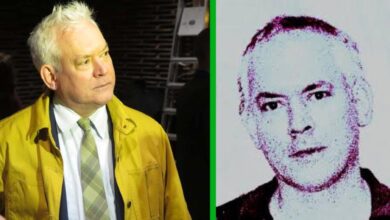

Stacey Koon was born on November 5, 1950, in Pennsylvania and later built his life and career in California. Before becoming widely known to the public, he lived a relatively ordinary life shaped by discipline, military service, and law enforcement ambitions. Like many police officers of his generation, Koon viewed policing as a structured career built around authority, order, and public service.
Before joining the police force, Stacey Koon served in the United States Air Force during the Vietnam era. His military experience reportedly influenced his leadership style and approach to discipline later in his career. People who followed his story over the years often pointed out that his military background played a major role in how he handled stressful situations and authority-based environments.
After leaving military service, Koon pursued higher education and eventually entered law enforcement. He joined the Los Angeles Police Department in the 1970s, a period when the LAPD was undergoing major transformations in policing culture and tactics. During those years, aggressive policing methods and strict command structures were becoming increasingly common within major American police departments.
Outside of his professional life, Stacey Koon also had a family life that stayed mostly private despite the enormous media attention that later surrounded him. References to Mary Koon and other family members, including Matthew, Gregory, Alicia, Kimberly, and Jennifer, occasionally surfaced in discussions related to the emotional impact the controversy had on those closest to him. While the public largely focused on the legal and political dimensions of the case, his family also experienced years of intense public scrutiny.
Stacey Koon’s Career with the LAPD
Koon spent many years building his reputation within the LAPD before the Rodney King incident changed the trajectory of his life forever. He rose through the department and eventually became a sergeant, a supervisory role that placed him in positions of authority during police operations and field responses.
At the time, the LAPD was known nationally for its hardline policing strategies. Officers were often trained to take aggressive control of situations, especially during arrests involving suspects believed to be resisting law enforcement. This culture shaped many officers’ attitudes and tactics during the 1980s and early 1990s.
As a supervising officer, Stacey Koon was responsible not only for his own conduct but also for overseeing the officers under his command. Leadership in police work involves making rapid decisions under pressure, and supporters of Koon later argued that he believed he was following department training and procedures during difficult situations.
However, critics argued that policing culture at the time allowed excessive force to become normalized. The debate surrounding Stacey Koon eventually expanded beyond one individual officer and became part of a larger national conversation about race, police accountability, and institutional reform in America.
The controversy surrounding his career eventually overshadowed nearly every other accomplishment or aspect of his law enforcement service. Decades later, his name remains closely tied to one of the most widely discussed police brutality cases in American history.
The Rodney King Incident That Changed Everything
The defining moment in Stacey Koon’s life occurred on March 3, 1991, during the arrest of Rodney King in Los Angeles. After a high-speed chase through the city, several LAPD officers attempted to restrain King, who was later beaten repeatedly with batons during the arrest.
What made this incident historically significant was the existence of video evidence. A nearby resident named George Holliday recorded the beating from his apartment balcony using a home camcorder. At a time before smartphones and social media, this footage quickly spread across television news networks and shocked viewers throughout the United States.
Stacey Koon was the supervising officer at the scene. Although he was not the officer delivering most of the baton strikes, prosecutors later argued that he failed to intervene appropriately and allowed excessive force to continue. The public reaction to the footage was immediate and intense because millions of Americans could watch the incident with their own eyes.
The Rodney King video transformed public perceptions of policing in America. Many people, especially within Black communities, argued that the footage confirmed long-standing concerns about police violence and racial discrimination. Others believed the officers were attempting to control a dangerous suspect under difficult conditions.
As media coverage intensified, Stacey Koon became one of the most recognizable police officers in America. His face appeared constantly on television, newspapers, and magazine covers as the nation debated what the footage truly showed and whether the officers involved should face criminal punishment.
The Trial and National Outrage
The criminal trial involving Stacey Koon and the other officers became one of the most closely watched legal proceedings of the early 1990s. Due to concerns about publicity and public opinion in Los Angeles, the trial was moved to Simi Valley, a community with a different demographic makeup and strong law enforcement support.
During the trial, defense attorneys argued that the officers acted according to police training and responded to what they believed was resistance from Rodney King. Prosecutors, however, argued that the beating went far beyond lawful force and represented a serious abuse of police authority.
When the verdicts were announced in April 1992, the public reaction was explosive. Stacey Koon and several other officers were acquitted on most charges, and many Americans were stunned by the outcome. Large protests quickly erupted throughout Los Angeles, eventually escalating into what became known as the 1992 Los Angeles riots.
The riots caused massive destruction, injuries, and deaths across the city. Businesses were burned, neighborhoods suffered severe damage, and tensions between communities and law enforcement reached a breaking point. The aftermath of the riots became one of the darkest chapters in modern Los Angeles history.
For Stacey Koon personally, the acquittal did not end his legal troubles or public controversy. Instead, the case entered a new phase as federal authorities stepped in to pursue civil rights charges against the officers involved.
Federal Conviction and Prison Sentence
After the state trial ended in acquittals, the federal government launched its own prosecution focused on civil rights violations. Unlike the earlier trial, federal prosecutors argued specifically that Rodney King’s constitutional rights had been violated during the arrest.
In 1993, Stacey Koon and Officer Laurence Powell were convicted in federal court. The convictions marked a major turning point because they demonstrated that the federal government was willing to intervene in high-profile police misconduct cases when public trust in local justice systems collapsed.
Koon was sentenced to prison and eventually served time at a federal correctional facility. His sentencing became notable in legal circles because the case later reached the United States Supreme Court in Koon v. United States, a significant decision involving federal sentencing guidelines.
The prison sentence represented a dramatic fall for a former police sergeant who had once spent his career enforcing the law. For supporters of Stacey Koon, the conviction symbolized political pressure and public anger influencing the justice system. Critics, however, viewed the sentence as a necessary step toward accountability.
During these years, his family, including Mary Koon and relatives such as Matthew, Gregory, Alicia, Kimberly, and Jennifer, largely stayed out of public attention. Nevertheless, the emotional impact of years of media exposure and controversy undoubtedly affected those connected to him personally.
Public Opinion and the Divided Legacy of Stacey Koon
Few American law enforcement figures have generated as much divided public opinion as Stacey Koon. Even decades after the Rodney King incident, debates continue regarding his actions, responsibility, and role in the larger problems facing policing in America.
Some former law enforcement officials and conservative commentators argued that Koon became a symbol of officers being judged unfairly in politically charged environments. They claimed the situation reflected the dangers of split-second decision-making being analyzed endlessly through media and public outrage.
Others strongly disagreed with that interpretation. Civil rights advocates and many members of the public viewed Stacey Koon as an example of systemic problems within policing culture, especially regarding excessive force and racial bias. For them, the Rodney King case became evidence that meaningful reform was desperately needed.
The incident also permanently changed how police encounters were viewed by the public. The Rodney King video is often considered one of the earliest modern examples of video-recorded police brutality shaping national conversations. Today, smartphone recordings and body camera footage play a central role in public accountability, but in 1991 this kind of visual evidence was still rare.
Stacey Koon’s legacy therefore extends beyond his own personal story. His name became part of broader national discussions involving race relations, criminal justice reform, police training, and public trust in law enforcement institutions.
Life After Prison and Public Reflections
Following his release from prison, Stacey Koon largely stepped away from public life compared to the intense media attention of the early 1990s. However, he occasionally gave interviews and spoke publicly about the Rodney King case and its aftermath.
Koon also authored a memoir titled Presumed Guilty: The Tragedy of the Rodney King Affair. In the book, he defended many of his decisions while criticizing aspects of the media narrative surrounding the case. Supporters viewed the memoir as an attempt to provide context and perspective, while critics saw it as an effort to avoid accountability.
Over the years, public discussions about police reform often revisited the Rodney King incident as a reference point. Each new national controversy involving police violence renewed attention on Stacey Koon and the events of 1991. His case remained deeply connected to conversations about how law enforcement officers should be trained, supervised, and held accountable.
The passage of time has not erased the significance of the case. Historians, journalists, legal scholars, and political analysts continue studying the Rodney King incident because it changed public awareness about policing in America. Stacey Koon remains one of the central figures in that historical moment.
Although his professional career ended in controversy, his story also serves as a reminder of how individual actions can become tied to larger social movements and national debates far beyond a single incident.
Conclusion
Stacey Koon remains one of the most controversial former police officers in modern American history. His role in the Rodney King incident placed him at the center of a national crisis involving race, policing, media coverage, and justice. What began as a police arrest eventually evolved into a historic event that reshaped conversations about law enforcement across the United States.
The legal battles, public outrage, federal convictions, and social consequences connected to Stacey Koon’s name continue to influence discussions about police accountability decades later. While opinions about him remain sharply divided, there is little disagreement about the historical importance of the case itself.